

High Court Clears OSP to Summon Ofori-Atta: GH¢1.4bn Procurement Case Deepens

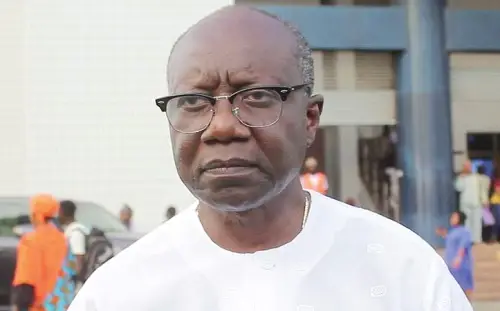
Ghana’s legal and governance landscape witnessed another significant development as the High Court granted an application by the Office of the Special Prosecutor (OSP) to serve court summons on former Finance Minister Kenneth Nana Yaw Ofori-Atta and his Chief of Staff, Ernest Akore. This marks a major step forward in what has become one of the most closely watched corruption-related cases in recent years, involving alleged procurement breaches and the misuse of public office.
On December 11, the OSP announced via its official Facebook page that the Court had formally permitted the summons to be served, paving the way for the two high-profile individuals to appear before the court to answer allegations levelled against them. The case, which also involves five other accused persons and a private company, continues to attract public and media attention due to its scale and its implications for governance, accountability, and public financial management in Ghana.
Bail Granted for Five Accused Persons
On the same day, the Court admitted Emmanuel Kofi Nti, Ammishaddai Owusu-Amoah, Isaac Crentsil, Evans Adusei, and Strategic Mobilisation Ghana Ltd (SMG) to bail. Each of these parties was granted bail to the tune of GH¢50 million, with two sureties required—both of whom must be justified to the satisfaction of the Court. As part of the bail conditions, the accused individuals are required to surrender all passports and travel documents to the Court. In addition, they must report to the Office of the Special Prosecutor once every week until further directives are issued.
Interestingly, because the Court sat late on the day the decision was delivered, the full bail terms will only take effect on Monday, December 15, when the accused persons return to complete the necessary bail procedures. Until then, they are to remain under their original bail conditions previously set by the OSP. This procedural detail was highlighted by the OSP in its social media announcement, emphasizing transparency in how the case is unfolding.
Understanding the Case: Alleged Procurement Irregularities and Financial Loss
The charges brought by the Prosecution revolve around what they describe as a well-orchestrated scheme designed to improperly secure procurement contracts for Strategic Mobilisation Ghana Ltd. According to the OSP, the accused persons allegedly manipulated procurement processes to benefit the private company, resulting in financial losses of over GH¢1.4 billion to the state.
This is not a small figure; it represents a substantial loss that, according to the Prosecution, could have escalated further into billions of dollars in additional payments if the State had not intervened at the right time. The magnitude of these alleged losses underscores the seriousness of the case and why it has become such a major focus within the national discourse on corruption and public accountability.
The accused persons are further charged with offenses, including:
- Influencing the procurement process for unlawful gain
- Using public office for profit
- Engaging in acts that conflict with established public procurement laws
The combination of these allegations paints a picture of systemic violations, if proven true, that could have had long-term consequences for Ghana’s economic stability and public confidence in governance systems.
The Individuals and Institutions Involved
The case brings together former heads of government institutions, private sector actors, and individuals with key responsibilities in public finance management. Among the accused are former heads of the Ghana Revenue Authority (GRA) and Customs Division, individuals who have played central roles in tax administration and revenue mobilisation for the state. Their involvement raises deeper questions about internal controls, ethical oversight, and the integrity of systems meant to safeguard public resources.
Strategic Mobilisation Ghana Ltd (SMG), the private company at the center of the alleged procurement breaches, is also implicated as an entity that reportedly benefited from irregular contract awards. This highlights the increasingly worrying trend of private-public collaborations where procurement processes may be exploited for private gain.
Why This Case Matters
This case is significant for several reasons. First, it demonstrates the OSP’s willingness to pursue cases involving high-ranking government officials, affirming its mandate to independently investigate and prosecute corruption-related offenses. The involvement of a former Finance Minister—who until recently oversaw the nation’s purse—underscores the seriousness with which these allegations are being treated.
Second, the financial implications are staggering. Losing over GH¢1.4 billion through alleged procurement manipulation not only affects the national budget but also undermines critical services and projects that rely on state funding. At a time when Ghana is navigating economic recovery, debt restructuring, and public financial reforms, cases like this strike at the heart of transparency and accountability.
Third, this development fuels ongoing public debates about the misuse of power, the need for stronger checks and balances, and the role of oversight institutions. The case may set a precedent for how public office holders are held accountable when allegations of corruption arise.
Next Steps and What to Expect
With the Court having granted the OSP’s application to summon Kenneth Ofori-Atta and Ernest Akore, the legal process is expected to intensify in the coming days. Their formal appearance before the Court will provide clearer insight into the defense they intend to present, and whether the Prosecution can substantiate the claims of unlawful procurement influence and financial loss.
Meanwhile, the other accused individuals who have been granted bail are expected to comply strictly with the reporting requirements and bail conditions. The Court will resume proceedings once all bail formalities are completed, and the trial process will move into the next phase.
A Developing Story
As the case progresses, it will continue to generate discussion both within and beyond Ghana’s borders. Issues of governance, procurement, transparency, and institutional integrity are global concerns, and Ghana’s handling of such a high-profile corruption case will be closely observed.
For now, the Court’s decision represents another milestone in the unfolding legal journey—one that the public, civil society organizations, and governance advocates will continue to follow closely.